
Background with Border Style
Add border style to to your Elementor Drop-Caps that suits the purpose of your writing and looks perfectly for your sites.
Lorem ipsum dolor sit amet, consec adipisicing elit, sed do eiusmod tempor incidid ut labore et dolore magna aliqua. Ut enim ad minim veniam, quis nostrud exercitation ullamco laboris nisi ut aliquip exl Lorem ipsum dolor sit amet, consectetur adipisicing elit, sed do eiusmod tempor incidid ut labore et dolore magna aliqua. Ut enim ad minim veniam, quis nostrud exercitation ullamco laboris nisi ut aliquip.
Background with Border Style
Add border style to to your Elementor Drop-Caps that suits the purpose of your writing and looks perfectly for your sites.
Background with Border Style
Add border style to to your Elementor Drop-Caps that suits the purpose of your writing and looks perfectly for your sites.
Background with Border Style
Add border style to to your Elementor Drop-Caps that suits the purpose of your writing and looks perfectly for your sites.
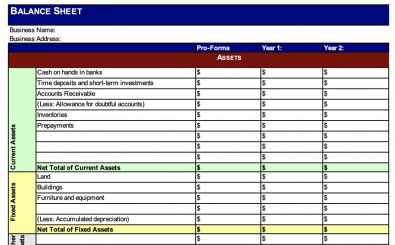
A pro forma balance sheet is a financial statement that projects your company’s assets, liabilities, and equity at a future point in time. Unlike a historical balance sheet, which shows where your business stands today, a pro forma version answers the question:
👉 “What will my balance sheet look like if a certain event happens?”
For example:
- What if you take out a $100,000 loan?
- What if you purchase new equipment worth $25,000?
- What if you acquire another business?
Your pro forma balance sheet will show the effect of those changes on your assets, liabilities, and owner’s equity.
Key Components of a Pro Forma Balance Sheet
Just like a standard balance sheet, it includes:
- Assets
- Current Assets (cash, accounts receivable, inventory)
- Non-Current Assets (equipment, property, vehicles, long-term investments)
- Liabilities
- Current Liabilities (accounts payable, short-term loans, line of credit)
- Non-Current Liabilities (long-term debt, mortgages, bonds payable)
- Equity
- Owner’s capital contributions
- Retained earnings
And it still follows the fundamental rule:
📌 Assets = Liabilities + Equity
🚀 Example of a Pro Forma Balance Sheet
Let’s imagine a small business called Daily Dumpling Deliveries preparing for expansion.
| Balance Sheet Items | 2021 (Current) | 2022 (Pro Forma) | 2023 (Pro Forma) |
|---|---|---|---|
| Assets | |||
| Checking Account | $13,000 | $16,000 | $19,000 |
| Savings Account | $35,000 | $41,000 | $45,000 |
| Accounts Receivable | $4,000 | $2,000 | $2,000 |
| Inventory | $14,000 | $17,000 | $21,000 |
| Total Current Assets | 66,000 | 76,000 | 87,000 |
| Production Equipment | $14,000 | $14,000 | $14,000 |
| Vehicle | $9,000 | $9,000 | $9,000 |
| Total Non-Current Assets | 23,000 | 23,000 | 23,000 |
| Total Assets | 89,000 | 99,000 | 110,000 |
| Liabilities | |||
| Accounts Payable | $10,000 | $9,000 | $11,000 |
| Line of Credit | $21,000 | $19,000 | $18,000 |
| Total Current Liabilities | 31,000 | 28,000 | 29,000 |
| Long-Term Loan | $40,000 | $36,000 | $32,000 |
| Total Liabilities | 71,000 | 64,000 | 61,000 |
| Equity | |||
| Owner’s Capital | $35,000 | $35,000 | $35,000 |
| Retained Earnings | $45,000 | $56,000 | $65,000 |
| Total Equity | 80,000 | 91,000 | 100,000 |
| Total Liabilities & Equity | 151,000 | 155,000 | 161,000 |
✅ Notice how the balance sheet projects changes in debt repayment, growing retained earnings, and higher asset balances as the company expands.
Why Pro Forma Balance Sheets Matter
- They give investors and lenders confidence by showing how new financing will affect your financial position.
- They help owners see if debt repayments and cash reserves are sustainable.
- They’re critical when planning acquisitions, expansions, or large capital purchases.
How Rocket Bookkeeper Helps
At Rocket Bookkeeper, we ensure your pro forma balance sheets are:
- Built on accurate bookkeeping records.
- Structured to highlight your business’s strengths for lenders or investors.
- Customized for realistic financial forecasting.
With clean books and professional reporting, your balance sheet projections won’t just be numbers—they’ll be a powerful roadmap for smarter business decisions.